
The rupee depreciated by 22 paise to close at a fresh lifetime low of 79.48 (provisional) against the US dollar on Monday, tracking a strong greenback overseas and subdued domestic equities. However, receding crude oil prices in the international market restricted the rupee's loss, forex traders said. At the interbank forex market, the local unit opened weak at 79.30 against the greenback and witnessed an intra-day high of 79.24 and a low of 79.49.

With the assembly polls in major states concluding, the government may slash petrol price next week by Rs 10 a litre, diesel by Rs 3 per litre and domestic LPG by Rs 20 per cylinder in line with fall in global oil prices.
Reliance Industries, India's largest private fuel retailer, may cut petrol and diesel prices by about Re one per litre on Thursday in step with a fall in international oil prices.

A rebound in oil prices, FII outflows and concerns over current account deficit weighed on the domestic currency, pushing it to fresh life-time lows.

Analysts cut upstream firms' FY15 earnings estimates, while raising those for GAIL and Gujarat Gas.

The market capitalisation of BSE-listed companies jumped to a lifetime peak of Rs 404.18 lakh crore on Thursday helped by a five-day rally in benchmark indices, making investors richer by Rs 11.29 lakh crore. Recovering after a sell-off in early trade, the 30-share BSE Sensex climbed 486.50 points or 0.66 per cent to settle at 74,339.44 on Thursday. During the day, it surged 718.31 points or 0.97 per cent to 74,571.25.
'As long as economic growth remains steady, creating jobs and generating stable incomes, the rise in home loans should not create problems.' 'If the growth trajectory changes course over the medium term and interest rates rise along with inflation, the expanding trend in home loans may not sustain.'
The downfall continues on the bourses as it fell further by over 720 points. At 1140 am, the Sensex was down by 692 points at 14,880 and the NSE Nifty was down 187 points at 4,441.

Oilseed output to surpass its previous record of 32.75 mt in 2013-14 to 33.59 mt this year
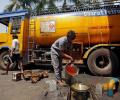
The medium-term scenario for oil marketing companies (OMCs) is high risk due to the surging crude and gas prices. Apart from OPEC-plus cutting production, the Hamas-Israel conflict has caused fears of supply disruption. The July-September quarter of 2023-24 (Q2FY24) saw positive surprises for OMCs. Strong gross refining margins (GRMs) more than offset weak marketing margins.

It would also be the fifth month of consecutive drops in the index.

India's macroeconomic situation has benefited from oil prices' decline.
The Union government on Thursday ruled out any hike in the price of petroleum products till June 15.

New Delhi has missed its target for partial privatisations for the past five years

Research and ratings agencies like Icra and Moody's have said the CAD in 2018-19 would be much higher than 2017-18

The stock of Godrej Consumer Products Limited (GCPL) fell about 3.7 per cent in trade after its Q3FY24 earnings disappointed brokerages and led to downgrades. Further, the stock, after a 15 per cent run-up over the past month prior to Monday's correction, had already factored in the upside from the business front. Its peer in the consumer space, Marico, too, saw a 4 per cent drop in its stock price.

22 companies won bids for the 31 contracts on offer; 15 were new entrants to the oil and gas business. Three years on, none of them have started production.

Equity benchmarks shrugged off lacklustre global cues to clock smart gains on Tuesday, buoyed by strong buying interest in index heavyweights Reliance Industries and HDFC twins. However, a depreciating rupee and unabated foreign fund outflows capped the gains, traders said. The 30-share BSE Sensex rallied 562.75 points or 0.94 per cent to settle at 60,655.72.

In 12 hikes, petrol price has gone up by Rs 6.55 per litre and diesel by Rs 7.04 a litre.
Reliance Industries Ltd on Friday reported a 9 per cent rise in its December quarter net profit as a planned maintenance-induced weakness in oil business earnings was offset by stability in retail and telecom verticals. The oil-to-retail-to-telecom conglomerate's consolidated net profit of Rs 17,265 crore, or Rs 25.52 per share, in October-December - the third quarter of the current 2023-24 fiscal - was 9.3 per cent higher than Rs 15,792 crore, or Rs 23.19 a share, earning a year back, according to a company statement. Quarter-on-quarter, the profit was lower when compared to Rs 17,394 crore earnings in the preceding three months ended September 30.

Oil has slumped from above $115 in June 2014 as shale oil from the United States has flooded the market

Crude oil hit an all time high in rupee terms; Tuesday figures expected to be higher

'Trump administration wanted a positive tone at this summit, but there was still some anxiety that there could be some awkward moments -- and there were not.'

'If weak indicators persist, there is a risk that India could slip into a prolonged slowdown similar to the one experienced between 2014 and 2019,' warns Debashis Basu.

The rupee had lost 15 paise to hit two-week closing low of 60.68 against the dollar in yesterday's trade on consistent demand for the US currency from importers and some banks on strong global cues.
'In staples, we have still managed in rural areas.'

The rupee on Wednesday declined by 16 paise to close at its fresh lifetime low of 77.60 against the US dollar amid unabated foreign fund outflows and a stronger greenback in overseas markets. At the interbank foreign exchange market, the rupee opened lower at 77.57 and later hit the day's low of 77.61 as the dollar rebounded in global markets following hawkish comments from US Federal Reserve chief Jerome Powell. Crude oil prices also surged over 1 per cent, which weighed on the rupee.

Benchmark indices ended the day in the negative territory on Tuesday amid weak global market trends and rising crude prices. Falling for the third day running, the 30-share BSE benchmark ended 208.24 points or 0.33 per cent lower at 62,626.36. During the day, it tumbled 444.53 points or 0.70 per cent to 62,390.07.

Equity benchmarks extended their decline for the fourth straight session on Wednesday, with the Sensex falling 214.85 points after the Reserve Bank raised the key interest rate by 50 basis points. Continuous foreign fund outflows and surging crude oil prices also weighed on markets. The 30-share BSE benchmark dropped 214.85 points or 0.39 per cent to settle at 54,892.49.
Falling oil prices, gains in index heavyweights like Reliance, HDFC and ONGC and a rebound in technology stocks saw India's stock market barometer Sensex jump 83.84 points or 1.1 per cent to close at 7,271.54.

From the 30-share Sensex pack, Mahindra & Mahindra, Tata Steel, Adani Ports, JSW Steel, IndusInd Bank, Reliance Industries, HDFC Bank and Kotak Mahindra Bank were the biggest laggards. Tata Motors, NTPC, Hindustan Unilever, Asian Paints and Infosys were the gainers.

More than a week after state-owned oil firms ended a 19-day pre-Karnataka poll hiatus on revising fuel prices, petrol and diesel rates have touched record highs.

After Rajasthan, petrol price on Thursday crossed the Rs 100 per litre mark in Madhya Pradesh after fuel rates were increased for the tenth day in a row. Petrol price was hiked by 34 paise per litre and diesel by 32 paise, according to a price notification of state-owned fuel retailers. While branded or additive-laced petrol, which attracts higher taxes, had crossed the Rs 100-mark in some places in states like Maharashtra, Madhya Pradesh and Rajasthan, regular petrol crossed the physiological mark in Sriganganagar town of Rajasthan on Wednesday, and on Thursday it went past that mark in Madhya Pradesh. In Anuppur of Madhya Pradesh, petrol is priced at Rs 100.25 per litre and diesel at Rs 90.35. Fuel prices differ from state to state depending on the incidence of local taxes such as VAT and freight charges.
The sustained decline in the price of crude oil has reversed the trend in petroleum product pricing. Private retailers are looking to cut prices from next month, while public sector oil companies have shaved their losses on retail sale of petrol and diesel by more than half.

Many individual states experienced higher inflation than the all-India figures during the financial year 2023-24 (FY24). Retail inflation figures in Telangana, Haryana, Rajasthan and Dadra and Nagar Haveli have been higher than national numbers every month of this financial year, shows a Business Standard analysis of state-wise figures, after the March inflation data was released on Friday. Experts noted that persistent high food inflation along with differences in the weights of rural and urban indices plays into the regional variation in inflation rates.

The ballooning of crude prices has significantly increased the country's oil import bill and it can also lead to a worsening of the current account deficit and fiscal deficit for the domestic economy.

A sharp rally in domestic stocks from June lows has once again rendered Indian markets expensive to their emerging-market (EM) peers. The 12-month forward price-to-earnings (P/E) multiple for the Nifty50 Index is around 20.6x - 82 per cent higher than 11.3 per cent for the MSCI EM Index. India's valuation premium has hit a five-month high. This is on the back of sharp outperformance to EM and global peers from June lows and also due to earnings downgrades, following the April-June quarter of 2022-23 earnings.
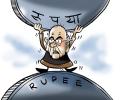
Fiscal deficit in first half of FY19 has already reached 95.3 per cent of full-year budget estimates.
.jpg)
The depreciation of the rupee, it said, reflects the wider CAD as well as lower net capital inflows.

The faster-than-expected rise in interest rates by the US Federal Reserve (US Fed) shook global financial markets in early 2022. And now the ongoing war between Russia and Ukraine has lifted commodity prices, with Brent crude oil hitting a 14-year high of $139 a barrel in intraday trade. All these developments have sent the equity markets across the world into a tailspin.
